A Facebook page is not a website. Here is what to do instead.
A social profile is not a substitute for owning your business online. Here is what a Facebook-only business loses, and the simple step that fixes it.
6 min read
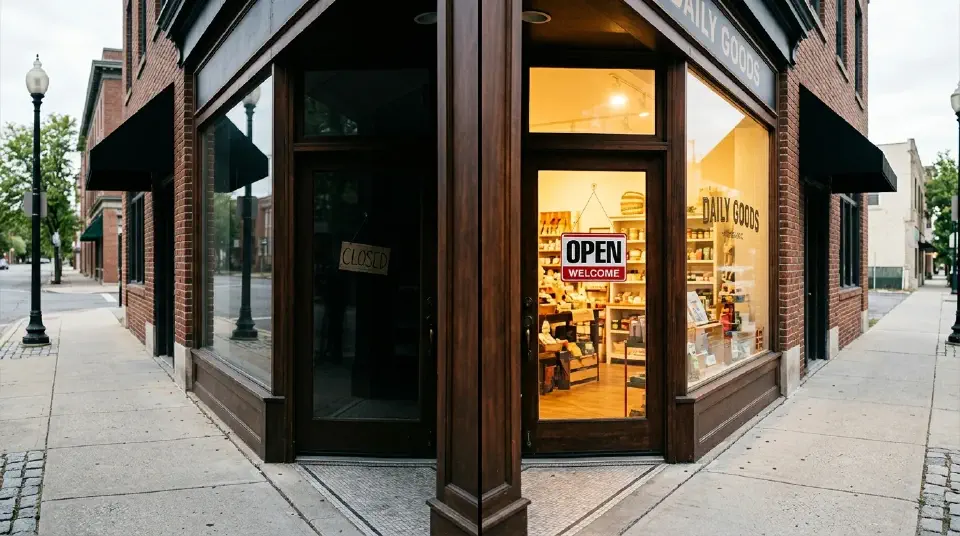
A lot of small service businesses run their entire online presence from a Facebook page. The thinking is reasonable. Facebook is free, your customers are already there, and setting up a page takes ten minutes.
The problem is that a Facebook page is not really yours. It is a tenant in someone else’s building. And like any tenant, you live by their rules, on their schedule, with their algorithm deciding who sees you on any given day.
This is not an argument against Facebook. It is an argument for not using a Facebook page as your only presence online.
What a Facebook page does well
To be fair: Facebook pages are great at a few specific things.
- They reach customers who are already on Facebook every day, especially in older demographics.
- They make it easy to post photos, hours updates, and short notes.
- They give customers a familiar way to message you.
- They let you run targeted local ads when you want to.
Use them for those things. The mistake is treating the page itself as your “website.”
Five things a Facebook-only business loses
1. You do not own the audience
The list of people who follow your page is a list Facebook keeps. If your page is restricted, hacked, or accidentally flagged, you cannot get that list out. The same is true if Facebook changes policies, raises ad rates, or loses popularity. You built an audience on rented land.
A real customer list, even just an email or phone list collected through your own site, is portable forever.
2. Your reach is throttled
When you post on a Facebook page, only a small fraction of your followers see it. The exact percentage depends on how Facebook’s algorithm feels about your post that week, and you cannot appeal it.
The page that appears to have 800 followers in 2024 might be reaching 40 of them per post in 2026. That is a slow, invisible decline that small business owners often miss until they wonder why nobody is calling anymore.
3. Search engines treat it like a profile, not a business
When somebody searches for plumber in Camden Delaware, Google has a specific kind of result it prefers to show: businesses with their own websites, listed in Google Business Profile, with consistent information across the web. A Facebook page can show up in those results, but it is a weaker signal than a real domain.
This is particularly true for searches done outside Facebook itself. Many of your future customers will never open the Facebook app. They will tap a search bar and Google. If the only thing tied to your business name is a Facebook URL, you are starting one or two ranks lower than the businesses with real sites.
4. The customer experience is awkward
Try this: open Facebook on your phone and tap the page of a business you do not follow. Notice how many “log in to see more” or “create an account” prompts you hit. Notice how the photos load slow. Notice that finding the phone number requires three taps.
For a customer in a hurry trying to call a plumber, every one of those friction points is a chance to bounce. A real website opens in the browser, shows the phone number, and lets them tap to call. No login. No app prompt. No friction.
5. Your business looks unfinished
The honest one. When somebody Googles your business and the only result is a Facebook page, the impression is “this is a side project, or a hobby business.” Right or wrong, it reads as informal.
For a kitchen remodel, a tax accountant, a roofer, or anyone else where customers are committing real money, “informal” is a problem. They want to see a business that looks like a business.
What to do instead
The fix is not to abandon Facebook. It is to add a real piece of the web that you actually own.
The minimum useful version is:
- A domain you own. Buy yourbusinessdover.com through a normal registrar. Cost: $10 to $20 per year.
- A simple website at that domain. One page is enough to start. Name, what you do, where, how to reach you, two photos of real work.
- The same business name, address, and phone number on the website, the Google Business Profile, and the Facebook page. All identical.
- Links between them. Your Facebook page should link to your website. Your website should link to your Facebook page if you keep it. Your Google Business Profile should link to your website.
That is the whole shape. It does not require a designer, a developer, or a year. It does require deciding to do it.
“But all my customers find me on Facebook”
Maybe today. The frame to test is the customers you do not have yet, the ones who do not use Facebook the way you do.
A surprising amount of work for service businesses comes from younger family members searching on behalf of older relatives. My mom needs a handyman in Felton, can you find someone reliable? That search happens in Google, on a phone, by someone who has zero interest in opening Facebook to evaluate a vendor for their parent.
If your only presence is Facebook, that whole referral pattern misses you entirely.
Use Facebook for what it is good at
Once you have your own website, here is the cleaner division:
- Website: the front door. The thing your business name searches return. The place customers go to confirm you are real and figure out how to contact you.
- Google Business Profile: the second front door. Where the near me searches and map searches land.
- Facebook page: ongoing community. Photos of work, neighborhood updates, before-and-afters, holiday hours. A way to stay top-of-mind for the customers who already follow you.
Each does the job it is best at, instead of one tool trying to do all three poorly.
What this looks like in practice
A roofer in Wilmington with no website, only a Facebook page, gets a referral. The friend texts the new prospect: “Try Smith Roofing, my buddy used them on our garage.”
In the only-Facebook version, the prospect taps Google, types Smith Roofing Wilmington, gets a half-finished page that has not been posted on in 8 months, sees a phone number that is not clickable on mobile, and gives up. The roofer never knows the lead existed.
In the Facebook-plus-website version, the prospect taps Google, types Smith Roofing Wilmington, lands on a clean one-page site at smithroofingwilmington.com. Phone number tappable. Service area listed. A few photos. Calls. Books.
Same business, same word-of-mouth, totally different outcome. The website did not generate the lead. It just made sure the lead landed.
That is the case for not running a service business on Facebook alone.